
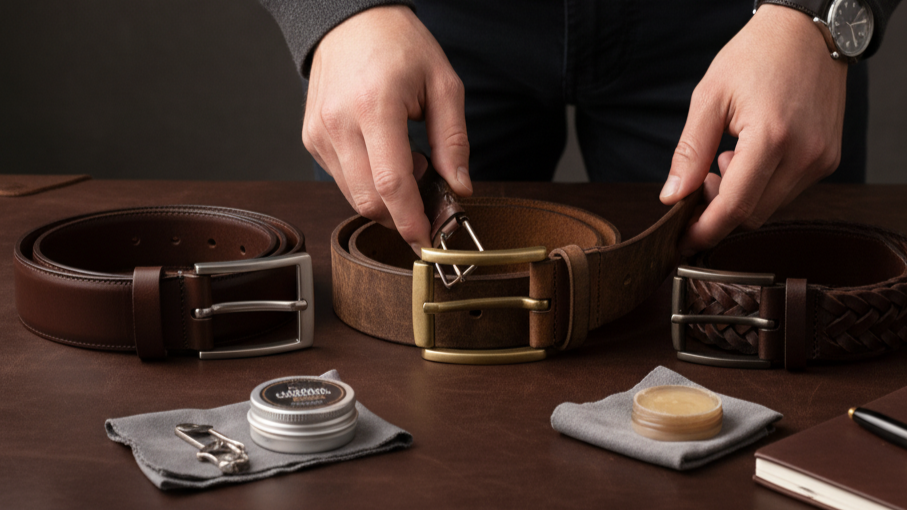
A good leather belt is one of the most important accessories in a man’s wardrobe. It is not just a tool to hold up your pants; it ties your whole look together. A quality belt will last for years, becoming softer and better looking with age.
But with so many choices, how do you pick the right one? This simple, detailed guide breaks down everything you need to know about size, style, and quality to find your perfect leather belt.
1. The Foundation of Quality: Understanding Leather
The word “leather” covers many different types, and knowing the difference is key to getting a durable belt.
Full Grain Leather
- The Best: This is the highest quality leather available. It uses the entire top layer of the animal hide.
- Look and Feel: It is thick, tough, and retains the natural character and imperfections of the hide.
- Durability: Full grain belts last decades. They develop a beautiful, rich surface shine, called a patina, over time. If you want a forever belt, choose full grain.
Top Grain Leather
- The Second Best: This is similar to full grain, but the very top layer is lightly sanded or buffed to remove imperfections.
- Look and Feel: It is smoother and more uniform than full grain. It is still a very durable and high quality material.
Genuine Leather (The Catch)
- Be Careful: This term is confusing. It usually means the belt is made from lower quality layers of hide that have been glued and finished to look uniform.
- Durability: These belts are less durable, tend to split apart or crack quickly, and will not age well. Avoid them if you want a long lasting product.
2. Choosing the Right Style: Dress vs. Casual
Belts are generally separated into two groups. You should own at least one of each.
The Dress Belt (Formal)
- Width: Narrower, usually between 1 inch to 1.5 inches wide. This sleek width fits the loops of dress trousers and suits perfectly.
- Look: Smooth, often polished or slightly shiny leather. The color should be solid, such as black or dark brown.
- Buckle: Small, simple, and polished. Usually a silver or gold rectangle known as a frame buckle with a single prong. The buckle should be understated.
- Rule: The color and shine of the belt must match the color and shine of your leather dress shoes. The buckle color should also match the metal of your watch or other accessories.
The Casual Belt (Everyday)
- Width: Wider, typically 1.5 inches or more. This wider size works well with the larger belt loops on jeans, chinos, and casual shorts.
- Look: Thicker, more rugged, and usually a matte finish. Casual belts can be braided, tooled (patterned), or come in lighter colors like tan or natural brown.
- Buckle: Can be larger and more decorative than a dress belt. Plate style, box style, or thicker frame buckles are common.
- Rule: While matching your shoes is still a good idea, the rule is more relaxed here. Brown with tan or even gray shoes can work for casual outfits.
3. How to Find the Perfect Belt Size
This is the most common mistake men make. Your belt size is not the same as your pant waist size.
The Simple Sizing Rule
As a general rule, you should buy a belt that is one to two sizes larger than your standard pant size.
- Example: If you wear a size 34 pant waist, you should buy a size 36 belt.
- The Goal: The belt should fit comfortably on the middle hole (usually the third hole out of five). This leaves a short “tail” of leather that ends neatly between your first belt loop and the next loop.
What to Avoid
- Do not buy a belt that is too long. A long tail hanging down or wrapping around your hip looks sloppy and ruins the clean line of your outfit.
- Do not buy a belt that is too short. If you have to use the very first hole, the belt is too tight and will strain the leather and stitching.
4. Final Quality Checks
Before you buy a leather belt, always inspect these small but important details.
- Stitching: Look closely at the edges. The stitching should be small, tight, even, and consistent all the way around the belt. Poor stitching is the first thing to break.
- Edges: High quality belts, especially dress belts, will have nicely finished edges. They should be smooth and painted or treated, not raw or rough cut.
- Buckle Attachment: The buckle should be secured with tight stitching or strong metal snaps or screws. If the leather is simply stapled or folded over, it will not last.
By choosing a high quality leather and matching the style and width to your trousers, your belt will become a polished, long lasting part of your wardrobe.