
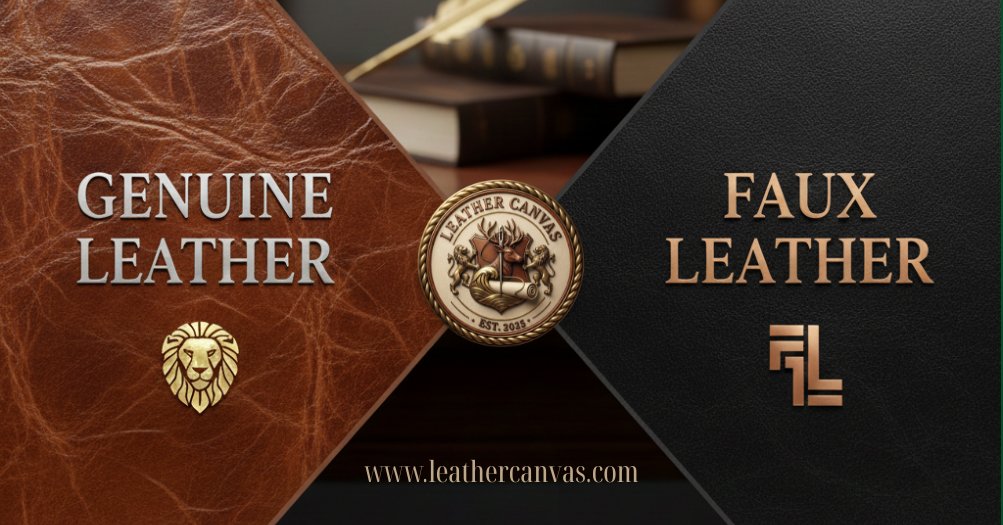
Hey there! If you’re shopping for a new jacket, bag, sofa, or shoes, you’ve probably seen items made from “genuine leather” or “faux leather” (also called vegan leather or synthetic leather). They can look pretty similar at first glance, but they are very different materials. One comes from animals, and the other is man-made.
In this blog post, we’ll break it all down in easy, simple words. We’ll compare them on things like how they feel, how long they last, cost, care, ethics, and even the environment. By the end, you’ll have a clear idea of which one might be best for you. Let’s dive in!
What Is Genuine Leather?
Genuine leather (also called real leather) is made from animal skin, most often from cows. The skin is treated in a process called tanning to make it strong and long-lasting. It’s a natural material that’s been used for thousands of years.
Here are some close-up views of genuine leather texture – notice the natural, uneven patterns and tiny pores:

What Is Faux Leather?
Faux leather is a man-made material designed to look and feel like real leather. It’s usually made from plastics like polyurethane (PU) or polyvinyl chloride (PVC), coated onto a fabric base. Some newer types use plant materials like pineapple leaves or mushrooms, but most common faux leather is plastic-based.
Close-up, faux leather often has a more uniform, repeated pattern:

How Do They Compare? Let’s Look at the Key Differences
1. Look and Feel
- Genuine Leather: Has a unique, natural texture with small imperfections. It feels soft and warm, and gets even better with age (it develops a shiny “patina”). It smells like real leather too!
- Faux Leather: Looks very similar from far away, especially good-quality ones. But up close, it feels more plastic-like and cooler to the touch. It doesn’t age the same way – it might crack instead of soften.
Genuine often wins for that luxurious, authentic vibe.
2. Durability and How Long It Lasts
- Genuine Leather: Super tough! A good leather jacket or sofa can last 10–20 years or more with care. It stretches a bit and molds to you.
- Faux Leather: Usually lasts 2–5 years. It can peel, crack, or fade faster, especially if used a lot or in sun/heat.
If you want something that lasts forever, genuine leather is usually the winner.
3. Comfort
- Genuine Leather: Breathes well, so it doesn’t make you sweaty. Great for clothes and furniture.
- Faux Leather: Doesn’t breathe as much, so it can feel sticky in hot weather.
Real leather feels more comfortable for long wear.
4. Cost
- Genuine Leather: More expensive upfront (often 2–5 times the price).
- Faux Leather: Much cheaper and easier on the wallet.
But remember: Genuine might save money long-term because it doesn’t need replacing as often.
5. Care and Maintenance
- Genuine Leather: Needs regular cleaning and conditioning to stay soft and prevent drying/cracking. Spills can stain if not wiped quickly.
- Faux Leather: Super easy! Just wipe with a damp cloth. More resistant to stains and water.
Faux is low-maintenance and great for families or pets.
6. Ethics and Animal Welfare
- Genuine Leather: Comes from animals, so it’s not cruelty-free. Many people avoid it for this reason.
- Faux Leather: No animals involved – it’s vegan and animal-friendly.
If avoiding animal products is important to you, faux leather is the clear choice.
7. Environmental Impact
This one is tricky – there’s no perfect winner.
- Genuine Leather: Involves animal farming, which uses land, water, and creates greenhouse gases. Tanning can pollute with chemicals. But it’s often a byproduct of the meat industry, and high-quality pieces last longer (so less waste).
- Faux Leather: No animals, but most is made from plastics (from oil). It doesn’t biodegrade, adds to microplastics, and production can release toxins. Newer plant-based options are better, but rare.
Many experts say a long-lasting genuine leather item can have less overall impact than replacing faux ones often. But it depends on how it’s made and used.
Pros and Cons Quick Summary
Genuine Leather Pros:
- Amazing durability and longevity
- Beautiful natural look and feel
- Gets better with age
- Breathable and comfortable
Genuine Leather Cons:
- Expensive
- Needs more care
- Not vegan (animal welfare concerns)
- Can have environmental issues from farming/tanning
Faux Leather Pros:
- Affordable
- Easy to clean
- Vegan and cruelty-free
- Lots of colors and styles
Faux Leather Cons:
- Shorter lifespan (peels/cracks)
- Less breathable
- Plastic-based (not eco-friendly for most types)
- Doesn’t feel as premium
Which One Should You Choose?
It really depends on what matters most to you!
- Choose genuine leather if you want a high-quality item that lasts decades, love the natural luxury feel, and are okay with the higher price and animal origin.
- Choose faux leather if you’re on a budget, want something vegan, need easy care, or prefer trendy options without animal use.
The best choice is often buying less but better – whether real or faux, pick quality and take good care of it.
If you’re looking for genuine authentic leather products in Pakistan, explore https://leathercanvas.com/shop/ – we offer a range of high-quality items like jackets, bags, wallets, and more made from 100% pure full-grain leather.
What do you think? Do you prefer genuine or faux? Share in the comments! Thanks for reading – happy shopping! 😊